There are four aspects for us to ponder, especially in light of some of the earliest English mystics such as Julian of Norwich and Richard Rolle.
1. God's love for us
2. Our love for God
3. Our love for our fellow man
4. Our love for ourselves
1. God's love for us
God is Love. Therefore He is incapable of doing anything that is not an expression of love. God's love is simply abounding; it oozes out of all his creation, whether in the healing hand of a doctor, a Mother sitting beside her sick child, a boy helping an old lady in difficulty, a hand on a shoulder to comfort the bereaved, someone in a restaurant listening very patiently to a stranger unleash his or her worries, in the loveliness of nature, in the stillness of a perfect sunset on a Summer's night. We all have experienced these in some form and know something of that Love which flows from them.
Our creation is an expression of His love as Julian of Norwich revealed to us in her "Revelations". Even "before He made us He loved us. ... This is a love made by the essential goodness of the Holy Spirit, a love that is mighty through the might of the Father, and wise through the wisdom of the Son." In His love He clothes us, and enfolds and embraces us; that tender love completely surrounds us, never to leave us." He wants us to know "that the noblest thing He has ever made is mankind, and its complete expression and perfect example is the blessed soul of Christ."
Just as He made man out of love, so "by the same love [God] would restore him not merely to his former bliss but to one that was even greater. Just as we were made like the Trinity at our first creation, so our Maker would have like our Saviour Jesus Christ, in heaven for ever by virtue of our re-creation."
However wonderful all these are, they are nothing when we compare them with God's greatest act of love, and the extent to which He was prepared to go for us. That unquenchable love is manifested when God chose to become man, when He chose to take our flesh; when He decided to enter this world in the same way as we do. The Caroline divine, Anthony Farindon, described it:
He suffered Himself to be fashioned in the womb of a virgin, digested into members, knit together with sinews, built up with bones, covered with flesh, enveloped with skin, raise up to the perfect similitude, no, drawn down to the low conditions of his creature! He would be anything but sin, to redeem man from sin, and save him. He would descend as low as the grave, yes, as hell itself, to raise him to a capability and hope of heaven and immortality.
Another Caroline divine, Richard Stuart, stated, "it pleased [God] ... that the same nature which caused our fall, should work our restoration, that as we lost ourselves by presuming of men to become as gods; so the means of our recovery should be this alone, God Himself must become man. Hence the Word took flesh and Christ was made in all things like to His brethren." So the Incarnation is Love dwelling amongst us, whether as the Babe in Bethlehem who shared His glorious birth with the lowly shepherds and beasts, or as the Teacher who gave us His new commandment to love God and our neighbour above everything else, or as the Exemplar with His fasting and praying in lonely places away from the crowds, or as the Saviour enduring His Passion patiently and stretching forth His body on the cross, or as the Risen Lord comforting His disciples with His promise of the Holy Spirit to be with them always.
Julian in describing His Passion declared, "He suffered for the sin of every one who is to be saved: and seeing the sorrow and desolation of us all Himself was made sorry through His kindness and love." His love for us "was so strong that He chose to suffer quite deliberately and with strong desire, enduring what He did with meekness and long-suffering."
This love was so overwhelmingly inexhaustible, that if needs be He would have died more than once for us. He even would have suffered more than He did on the cross if necessary. He could have had many crosses. Such love Julian asserts is "beyond human capacity to compute." However it is "the greatest gesture our Lord God could make to the soul of man." Julian explains God's meaning in being prepared to die many times for us as, "How could I not, out of love for you, do all I can for you?
.
2.Our Love for God.
"True life is love as God Himself is Love. That is why it is only love and finally, the encounter with God Himself which is the most important." (Bp. Alexander's Life of Father John of Kronstadt). And Our Lord in giving us the two great commandments, reminded us of our primal duty. "You shall love the Lord your God with all your heart," (Luke 10:27)
How often do we think about why we are here? We were made simply because God loves us. He created us for Himself, and keeps us within this love. We are His joy and delight, and He want us to reciprocate these. That is what St. Augustine is echoing when he exclaims that our hearts are restless until they rest in God. Julian expressed it, "So man's soul is made by God, and in the same instant joined to God." He therefore wants us to respond to that love. She also tells us that "His will is that we should know that our soul is alive, and that through His goodness and grace this life will continue in heaven for ever, loving Him, thanking Him, praising Him." "The love of God Most High for our soul is so wonderful that it surpasses all knowledge. No created being can know the greatness, the sweetness, the tenderness of the love that our Maker has for us. By His grace and help therefore let us in spirit stand and gaze, eternally marvelling at the supreme, surpassing, single-minded, incalculable love that God, who is goodness has for us. ... We shall never cease wanting and longing until we possess Him in fullness and joy. Then we shall have no further wants."
St. Anthony of Padua announced that God "deserves to be loved by you because, although He is your Lord God, He nevertheless made Himself your servant so that you might become His and not be ashamed to serve Him. Indeed, on account of your sins, "your God became your servant for thirty-three years to free you from your slavery to the devil." Therefore love God
who made you and who made Himself your servant. He gave Himself totally to you so that you might give yourself wholly to Him. He gave Himself to you when He created you out of nothing, and He gave Himself to you a second time when He saved you from evil so that you might be good. And whenever He gave Himself, He restored you to yourself. Thus, created out of nothing and saved from evil, you are doubly and completely in debt to Him.
Anthony reminded us we must not be like Ananias and Sapphira and keep part of ourselves back, otherwise we shall "perish just as they did. Love wholly and partially. God does not have parts but is present totally everywhere, and consequently, since He is wholly in whatever belongs to Him, He does not want only a part of you. If you reserve a part of yourself for yourself, then you are yours and not His."
The mediævalist mystic, Richard Rolle declared, "For everyone who loves God is free, ... It is when we love earthly things and earthly comforts for their own sake that we show clearly that we are not loving God ... We are setting things above their Creator, and caring nothing for the desire and pursuit of things eternal. Surely it is a dreadful moment for the soul ... when a man surrenders himself wholly to the world, and deliberately gives himself over to the lust of the flesh, and error of every kind." Rolle speaks of God's love being like a fire "which sets our hearts aflame so that they glow and burn" and therefore "purges them from all the foulness of sin." Of course years before St. Paul had taught us that "Nothing will separate me from the love of Christ."
If we are to love God we must first know Him. How do we get to know Him? The best way is by spending time with Him in silent prayer, at home or before the Blessed Sacrament, in the daily Eucharist, and through meditation on the gospels. Through the life of Christ we learn so much about the nature of God. If we follow the Liturgical readings for the year we cover every aspect of our Lord's life. Meditating simply on the divine mysteries, as set out in the joyful, sorrowful and glorious are also helpful.
Once we know Christ we can begin to love Him truly. Rolle tells us in loving Christ completely will involve warmth, song and sweetness.
By warmth Rolle meant a "fervour when the mind is truly ablaze with eternal love, and the heart similarly feels itself burning with a love that is not imaginary but real. For a heart set on fire produces a feeling of fiery love."
By song Rolle meant "when there is on the soul, overflowing and ardent, a sweet feeling of heavenly praise; when thought turns into song; when the mind is on thrall to sweetest harmony." These two Rolle emphasised are not achieved "by doing nothing but through the utmost devotion." From these come sweetness, "Fervour and song bring marvellous delight to a soul." Thus
In a truly loving mind thee is always a song of glory and an inner flame of love. They surge up out of a clear conscience, out of an abundant spiritual joy, out of inward gladness. Small wonder if a love like this wins through to a perfect love. Love of this sort is immense in its fervour, its whole direction Godwards, totally unrestrained in its love for Him. It cleaves to Christ without the opposition of silly thoughts; it rejoices day and night in Jesus, never distracted from Him, never seduced by evil.
.
3 Love for our fellow man
"For in the love of God is the love of our neighbour, declared many saints, including Richard Rolle. "For when God is loved by us with all our heart and mind, undoubtedly both our neighbour and every other lovable thing is loved as well." That wonderful mystic of the twentieth century, Thomas Merton also aptly told us, "Our faith is given us not to see whether or not our neighbour is Christ, but to recognize Christ in him and to help our love make both him and ourselves more fully Christ."
Can we also be like Julian who declared after her vision of her Creator's love and goodness, that she "was greatly moved with love for my fellow Christians, that they might know and see what I was seeing, for I wanted it to cheer them too." "Whoever loves His fellow Christians for God, loves all there is." One of the most wonderful aspects about growing in love for our fellow man, Christ Himself becomes apparent to us in the world as well as in our brothers and sisters.
Christ commanded us to love one another, as He loves us. It is in Christ that we who are all different by race, culture, upbringing, aspirations, experiences, are all brought together. In loving Christ we in turn love our brethren, and become one body, on Spirit. No more are we bound in love together than in the Eucharist- the sacrament of Love. However if we have not reached a full person "in Christ" ourselves then we cannot know the nature and appreciate the depth of this bond and love in Christ. This can only be achieved when we are prepared to live on the level on Christ's love.
Merton points out those who have not reached this maturity in Christ, tend to have a "romantic" approach to Christ, i.e. they seek "Christ not in love of those flesh and blood brothers with whom we live and work, but in some as yet unrealized ideal of brotherhood". "It is always a romantic evasion to turn from the love of people to the love of love itself; to love mankind more than individual men, to love 'brotherhood' and 'unity' more than one's brothers, neighbours and associates.
This corruption of love can be romantic also in its love of God. It is no longer Christ himself that is loved and sought, but perhaps an objectivised 'experience'of Christ, a degree of prayer, a mystical state. What is loved then ceases to be Christ, but the subjective reactions which are aroused in me by the supposed presence of Christ in thought or love or prayer.
The romantic tendency leads to a substitution of aestheticism, or false mysticism, or quietism, for genuine faith and love, and what it seeks in the church is not so much reality as a protection against responsibility.
Thus
Nothing could be more tragic than a pseudo-mystical enthusiasm which mistakes strong emotion for the voice of God, and on the basis of such emotion claims a 'spiritual' authority to break away from communion with the rest of the faithful and to despise legitimate authority. This is not that strong sacrificial love of God which rises above individual interests and cements divergent groups in a transcendent unity.
For the authoritarian Christian "love of the brother consists, not in helping his brother to grow and mature in love as an individual person loved by Christ, but in making him 'toe the line' and fulfil exterior obligations, without any regard for the interior need of his soul for love, understanding and communion. ...
This is in reality a fatal perversion of the Christian spirit. Such 'love' is the enemy of the Cross of Christ because it flatly contradicts the teaching and the mercy of Christ. It treats man as if he were made for the sabbath. It loves concepts and despises persons. It is the kind of love that says 'corban'."
As Merton indicated so many people, even Christians possess a "corrupt form of love", i.e. they live under the misapphrension that someone can only be loved when he or she has "become a worthy object of love". We all know it is very easy to love the beautiful, but that is not Christ's attitude. Indeed if He waited until I was truly beautiful, I know I should be still waiting for Him to love me. Worthiness has nothing to do with loving. Indeed those of us who have tried to reach out and love the difficult, the irksome, the shy, the irritable, how often those souls eventually begin to flicker until they sparkle. Practically everyone responds to love and warmth, and care.
Once we no longer regard our brother or sister "as an object or thing," or treat him or her "merely as a friend or an associate" but see in him or her the same Lord who is the life of my own soul, then "we have a communion ... that transcends every object of knowledge, because it is not just the climate of our own inner being, the peculiar silence of our natural self, but is at once the climate of God and the climate of all men. Once we know this, ... we can breathe the sweet air of Christ."
4. Love for ourselves
Before we can love God we must love ourselves as God made us. Anthony of Padua reminded us if we do not love ourselves then we are denying the whole purpose of creation. "You should love yourself as created by God who loved you first, and you ought to hate in yourself what you have debased through your sins. Love your life with the same love with which God loves you, and hate yourself for having hated what God loved in you and did for you."
We may not like what we see in ourselves, but remember the only person we can change in this life is ourselves through the power of prayer and God's grace. There is only one "me" in this world, and God wants me to be that person so that I can do only what I can do for Him. If we cloak ourselves with security blankets because we do not want to discover the real "me", it is time to shed them one by one under the protection of God's embracing love. When we can love ourselves for what we actually are, then we shall have less trouble in loving others and God. Rolle reminds us
If our love is pure and perfect, it means that whatever our hearts love is God. If indeed we love ourselves and all other lovable creatures for God, and only in God, what else are we doing but loving Him both in ourselves and in them?
Love of God, our neighbours and ourselves are the only things we can take with us when we depart this earthly life. We shall be judged on how we have loved.
Thank you O blessed Trinity for Thy Love that endures forever. You love me more than I myself know how to love. Fill our hearts with Thy love, O Holy Spirit, so that we can grow in understanding the breadth, height and depth of Thy love. Then so filled with Thy love may it reach out and touch all those with whom we live, work and meet. Amen
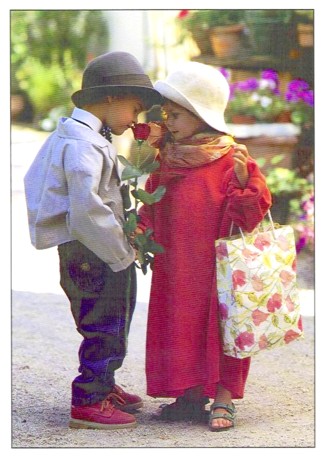

 God is Love. Therefore He is incapable of doing anything that is not an expression of love. God's love is simply abounding; it oozes out of all his creation, whether in the healing hand of a doctor, a Mother sitting beside her sick child, a boy helping an old lady in difficulty, a hand on a shoulder to comfort the bereaved, someone in a restaurant listening very patiently to a stranger unleash his or her worries, in the loveliness of nature, in the stillness of a perfect sunset on a Summer's night. We all have experienced these in some form and know something of that Love which flows from them.