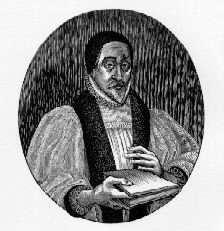
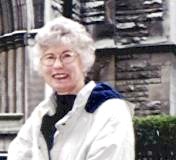
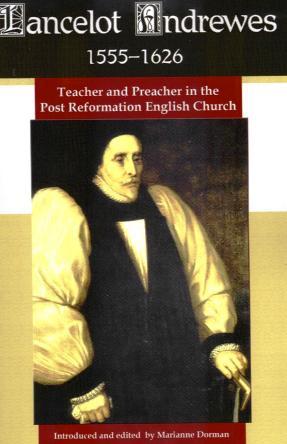
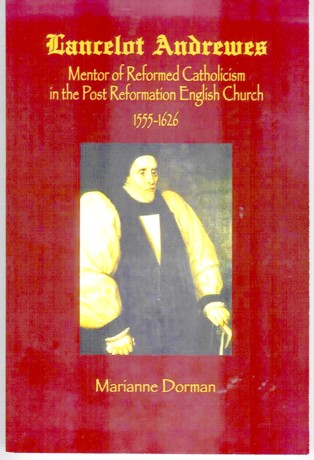
I have worked for many years on Lancelot Andrewes and the Post-Reformation in the Church in England, and I have concluded that he is responsible for upholding the ancient Catholic tradition in the English Church more than any other divine.
AND THE REFORMED CATHOLIC FAITH IN THE POST-REFORMATION CHURCH IN
ENGLAND THAT HE STROVE TO UPHOLD AND HAS HANDED DOWN TO US THROUGH
HIS SERMONS, LECTURES, PRAYERS AND WORSHIP, AND ESPECIALLY HIS LOVE FOR
OUR DEAR LORD IN THE SACRAMENT OF THE ALTAR.
"All that we can desire is for us to be with Him, with God,
and He to be with us; and we from Him, or He from us,
never to be parted."
This page was last updated on: August 4, 2008
VISITORS TO THIS WEBSITE
If you are seriously interested in promoting the life and work of Lancelot Andrewes I would like to hear from you. If there is enough interest on both sides of the Atlantic it may be possible to organise an Andrewes' Society with a bi-yearly publication.
ALL MATERIAL ON THIS WEBISTE IS UNDER COPYRIGHT. PERMISSION IS GIVEN TO USE MATERIAL BUT IT MUST BE ACKNOWLEDGED.
The English Church
commemorates
Andrewes on the
25th September.
As Archbishop Laud
wrote in his diary on that day, 1626:
"At four o'clock in the morning ... this
great light was
extinguished."
"... Men may talk what they will, but sure there is no joy in the world to the joy of a man saved: no joy so great,no news so welcome, as to one ready to perish, in case of a lost man, to hear of one that will save him. In danger of perishing by sickness, to hear of one will make him well again; by sentence of the law, of one with a pardon to save his life; by enemies, of one that will rescue and set him in safety. Tell any of these, assure them but of a Saviour. It is the best news he ever heard in his life.
Christmass, 1609.
Be unto me, O Lord, always thy mighty hand for defence:
thy mercy in Christ for salvation:
thine all true word for instruction:
the grace of thy life bringing Spirit for comfort until the end and in the end.
I commend unto Thee,
O Lord,
my soul and my body,
my mind and my thoughts,
my words and my deeds,
my hands, feet and eyes,
my life and my death.
O Gladsome Light of the holy glory of the immortal Father, heavenly holy, blest, O Jesus Christ, being come to the going down of the sun, seeing the evening light, we hymn the Father and the Son and the Holy Spirit of God.
Worthy art Thou at all times to be hymned with holy voices, Son of God, which givest life:
therefore the world doth glorify Thee.
Thou which givest evening to be the end of the day, whereby to bring to our mind the evening of life:
grant me always to remember the days of darkness that they are many;
that the night cometh, when no man can work;
to forestall the darkness by working,
lest we be cast into outer darkness;
always to cry unto Thee,
Abide with us, O Lord, for it is toward evening, and the day of our life is far spent.
Let me think upon Thy Name in the night season, and keep Thy law:
let the evening prayer go up unto Thee,.
and thy pity come down unto us,
O Thou which givest songs in the night,
which makest the outgoings of the morning and evening to praise Thee,
which givest thy beloved wholesome sleep.
To Thee, O Lord, I confess (forasmuch as, if I will, I cannot hide them)
to Thee I confess my sins, exceeding many, great, grievous.
I profess that I grieve withal, the which Thou also knowest:
but I confess that I have sinned far more than is the grief which is present with me wherewith to weep for my sins.
Grief so great is lacking unto me, is plainly lacking:
I am far one from what there ought to be.
I can sin much:
I cannot grieve much.
My dryness, my dryness! woe unto me!
I cannot much, but I desire much:
for I know that even much is not great enough.
Would God such grief were with me:
yea would God even more.
But I cannot win it of myself.
I am dried up, dried up like a potsherd.
Woe unto me!
Do Thou, O Lord, increase the fountain
which I have,
Do Thou, O Lord, supply of tears which I have not -
a melted heart, groanings which cannot be uttered.
In the meanwhile, forasmuch as there is with me a ready mind, hold me accepted according to that I have,
not according to that I have not.
Yet I will extend, forasmuch as I cannot intend it more, through all the years of my life.
No other subject dominated Andrewes' sermons and lectures more than the Eucharist because for him "the chief point is that in the Sacrament Christ himself is received." It is our perpetual Bethlehem, the manna from heaven, and at the end of life the viaticum as the soul journeys onwards. At the altar is our mystical union with our beloved Lord. "We are said to come to Christ in Baptism, ... in the hearing of the word," and in preaching, "but Christ receiveth none of these, but that we come to him as is panis vitae, when we come to Christ, as he offers himself in the Sacrament." Christ gathers "us as close and near as alimentum alito, that is as near as near may be." Indeed it is more, for by "that blessed union" it enables us to enter into "the highest perfection we can in this life aspire unto."